Welcome to Aachen!
A Brief Introduction to Aachen for English-speakers
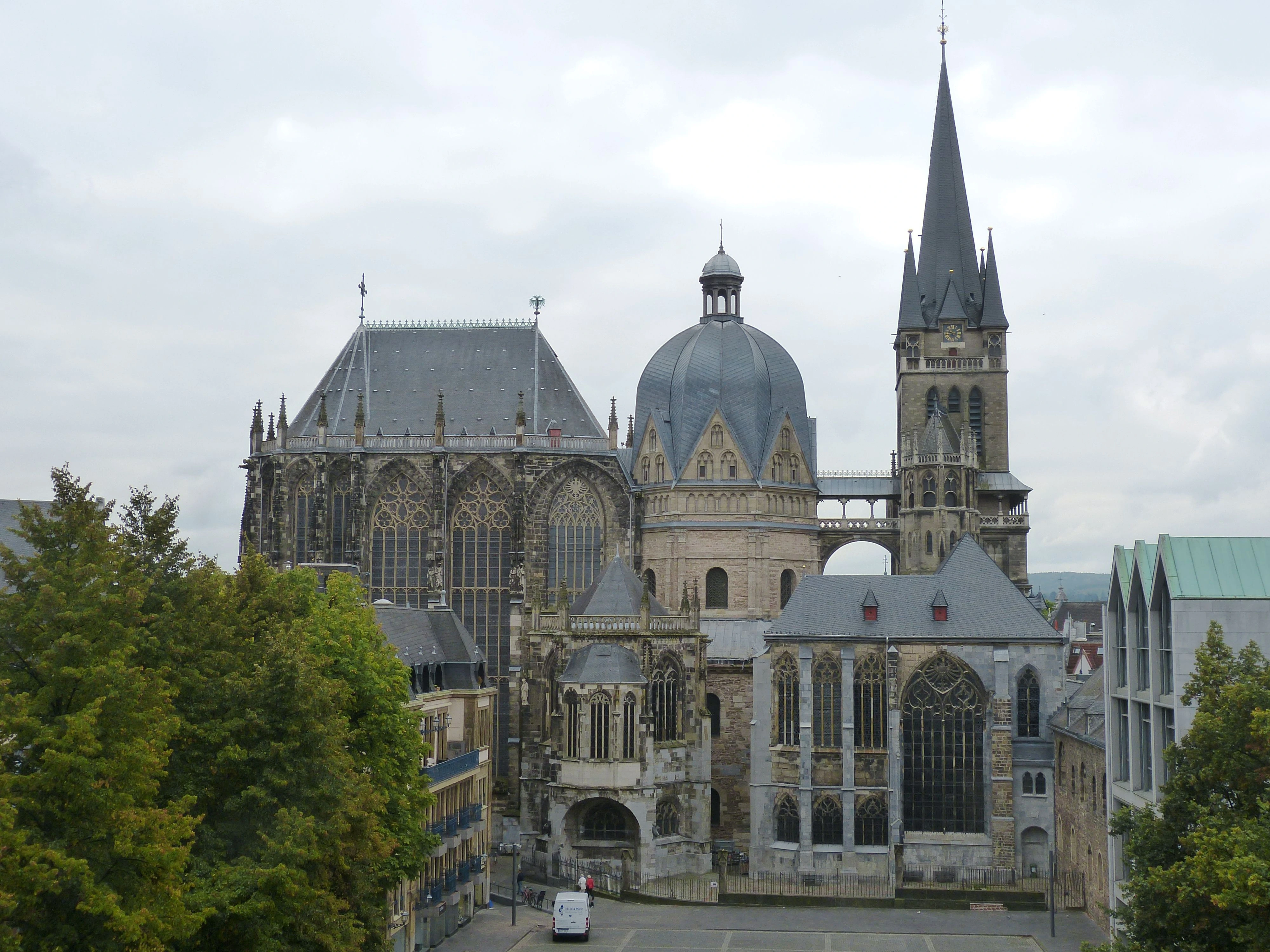
Welcome to Aachen, a city full of history and charm! A town located far west in the state of North Rhine-Westphalia, Germany, at the crossroads of Belgium and the Netherlands. It is a city with something to offer, whether you are a student, a professional, or a family. What is there to know about its history? What is useful information on finding accommodation and just running errands in general? Will you be able to navigate in English? We will cover all of these questions and more!
A Brief Snapshot of the History and Significance of Aachen
The roots of Aachen go back to Roman times, when it served as a notable center within the empire. Because of the healing thermal springs, the city was known as Aqua Granni and became a thriving spa destination.
As a soon-to-be Aachener, you might have already encountered the phrase: “The city of Charlemagne”. Why, you might ask? It's because Aachen was his favorite city, so much so that he established it as his imperial residence and chose it as the location for his magnificent Palatine Chapel, now part of the Aachen Cathedral.
For over 600 years, Aachen was the coronation city for German kings, with over 30 monarchs crowned within the cathedral walls. The Aachen Cathedral was named the first UNESCO World Heritage Site of Germany in 1978.
If you're a history buff, you may already know much of this, or even have looked it up yourself. For those who'd like to dive deeper, we highly recommend exploring the official website of the Aachen Cathedral and the Aachen Britannica page for more details.
Aachen is also known as Aix-la-Chapelle (in French) and Aken (in Dutch).
Cultural Scene
Theater Aachen offers a varied program of opera, drama, concerts, and related stage works, while the smaller Mörgens venue focuses on contemporary and experimental productions, particularly for younger audiences. Visitors interested in theater or music can usually find events that match their interests in Aachen, including opera, spoken theater, dance-related projects, and concert formats at these venues.
Aachen also has venues that host jazz events, including Club Tajine, which runs recurring open-stage jazz sessions, typically on the last Monday of the month.
You can read our article about the Museums of Aachen by clicking on this link.
Carnival in Aachen
Carnival, or Fastelovend, is a key celebration within Rhineland tradition, and in Aachen it builds up to “Rosenmontag” (Rose Monday), when a large parade with numerous floats and marching bands moves through the city, where locals and visitors shout "Oche Alaaf!", the traditional carnival greeting of Aachen. "Oche" refers to the city in the local dialect, and "Alaaf" means something like “all off” or “make way,” signaling festive unity.
On Carnival Sunday, you can experience the Children’s Costume Carnival, a parade with groups of children, school classes, and marching bands that keep the Fastelovend spirit alive. When you watch it, the atmosphere feels rooted in long-standing local tradition and is often described as reminiscent of how people celebrated before the Second World War.
Aachen Christmas Market
The Aachen Christmas market takes place each year from late November until just before Christmas, spreading through the streets around the cathedral and town hall with roughly 120 wooden stalls.
At the stalls, you can browse a mix of handmade crafts, seasonal gifts and decorations, along with regional foods such as Aachener Printen, freshly fried potato pancakes known as Kartoffelpuffer, and the famous flame cake "Flammkuchen".
For further information, you can check the official Aachen Christmas Market website.
Moving to Aachen: A Guide for English-Speaking Newcomers
Registration and Language
If you are a citizen of an EU country, you must only register your residence at the municipal citizens' office called Bürgeramt. If you are a citizen from outside the EU, you need to go through the process of obtaining a residence permit.
While you might initially be worried about the language barrier, most of the young people here speak English. However, we still encourage you to take some time and learn German. You can do this through various available programs and language schools; for example, for students and employees of RWTH or their spouses, we would recommend the intensive German courses from A1 to C1 offered by RWTH Aachen. They also have half-level classes, i.e., A1.1 and A1.2, instead of an intensive A1 course.
Healthcare
Aachen has multiple hospitals, and some of them offer services for English-speaking international patients. Uniklinik via a dedicated call center and international office, and Luisenhospital through English delivery tours and experience with foreign patients.
Understanding the German healthcare system is important, particularly the division between public (statutory) and private insurance, which affects access to covered services. You can read more details in our article on how to navigate the system here.
Living in Aachen as an Expat or a Student
The city is easily walkable or bikeable, which makes it ideal for exploring.
Laurensberg and Burtscheid, for example, are much quieter, making them suitable for families. Popular neighborhoods like Pontviertel or Centrum are ideal for students, as they are closer to the RWTH university and to numerous clubs, bars, and restaurants.
For accommodation as a student, you might want to try shared flats or WGs (Wohngemeinschaften) or consider student dormitories offered by RWTH Aachen and other housing providers for cheaper, more community-oriented living options.
You can use wg-gesucht, immobilienscout24, and kleinanzeigen to find housing.
According to the 2025 Aachen Mietspiegel, the average cold rent is €11.53/m², with 1-room apartments at €12.97/m². For a 40–60 m² one-bedroom, expect €520–€780 monthly plus utilities (~€2.50/m²). WG rooms typically start at €300–€500.
Accommodation & Apartment Hunting
We are not going to lie, finding accommodation in Aachen is not the easiest task.
It might be a bit easier for students, because of the numerous student housing options, but if you want to have your apartment, be prepared to:
- a) either look for months,
- b) pay more than you might have initially expected,
- c) lessen your expectations, or
- d) all of the above.
It might be new to you, depending on which country you are coming from, but most apartments come unfurnished here, even to the point that renting a place with no kitchen and lightbulbs is pretty common as well.
Approximately half of the German population rent, rather than own, so they invest more in their flats by purchasing their appliances and customizing them to their liking, which usually means that when they move, they take what they can with them or sell some of their belongings.
An agreement of the next tenant having to take over certain furniture with the owner is also pretty common, so on top of the 2-3 months deposit and first month of rent, you may also be expected to pay a few hundred or thousand more on furniture/appliances which were owned and used by the previous tenant. Of course, they cannot force you to do so, but the owner has the right to choose someone willing to. However, you may miss your chance to rent an apartment that ticks all the boxes for you solely because of this.
Why Choose Aachen for Your Next Chapter?
As a student or researcher, you might be attracted to RWTH Aachen University, which is highly regarded in Europe. Aachen also has a strong, innovation-driven economy, with many startups, companies, and research institutes in fields such as automotive engineering, mechanical and production technology, IT, Artificial Intelligence, and medical technology, offering good prospects for internships and future careers.
Living here also means being close to other countries, with cities like Maastricht in the Netherlands and Liège in Belgium reachable in about an hour. Düsseldorf and Cologne can be easily reached from Aachen by regional and intercity trains, usually in about one to one and a half hours. From Brussels, around an hour away by train, frequent high‑speed services connect to London and Paris, so trips to England and France are straightforward. Active expat communities, international clubs, and regular meetups make it easier to build a network and feel at home in the city.
Welcome again, and we hope you find what you are looking for here.